TALKS
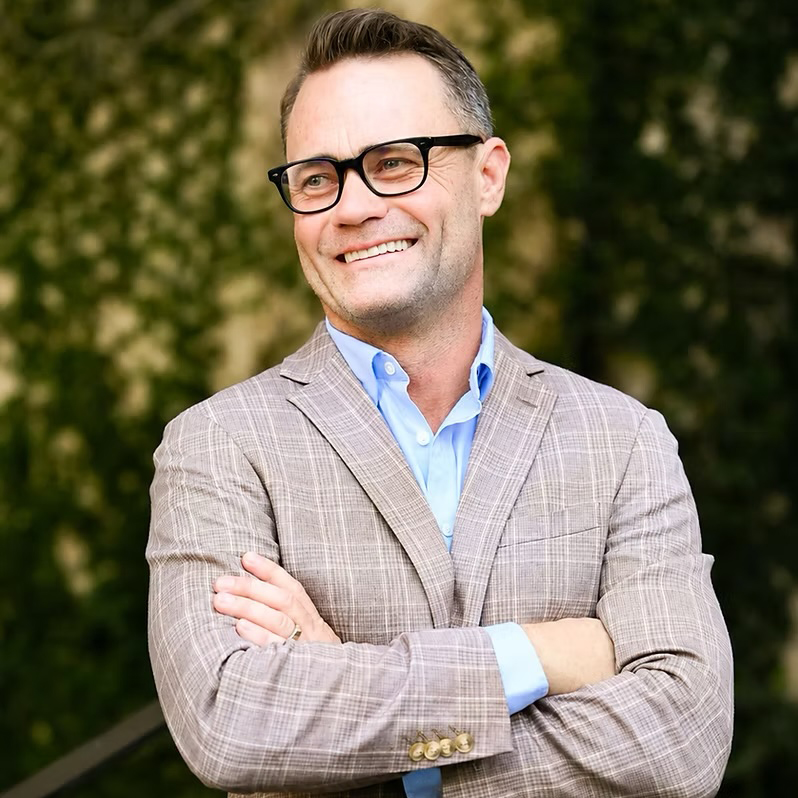
Johnny Duda, EdD | Learning Engineer
At 14, Johnny Duda was placed in remedial classes and told he wasn’t college material. Four years later, Harvard admitted him — not because his intelligence had suddenly changed, but because he had learned what school had never explicitly taught him: how to learn on his own.
After twenty-five years of teaching, Duda sees students across the learning spectrum facing the same challenges — especially in reading comprehension. They are expected to understand texts independently, yet rarely taught to begin — and begin again — with an honest account of what they do not understand: their “You Are Here.” From there, each point of confusion can become a waypoint toward durable understanding. In the age of AI, this capacity is more urgent than ever.
AI can now produce explanations students do not understand and arguments they never constructed. The result is an illusion of fluency: the work looks finished, but the learner is not. The real danger is not that students will use AI to cheat. It is that AI will cheat them out of the productive struggle that teaches them how to think. Duda shows how students can navigate that struggle and become their own best teachers.
Back to TEDxJacksonville 2027

Johnny Duda is an educator who has spent twenty-five years teaching students how to teach themselves — work that has taken on new urgency in the age of AI. Written off at fourteen and placed in remedial classes, he struggled in traditional lecture-based classrooms while his learning disabilities went undiagnosed for decades. His experiments with self-directed study produced three strategies for simplifying learning — a framework that carried him to Harvard. He went on to earn a doctorate in education from UCLA, focusing on literacy development and teacher training. Through years of teaching, practice, and research, he developed those strategies into Functional Learning, a system designed to help students become their own best teachers. Along the way, he founded Student Voice Project, a nonprofit supporting literacy initiatives in under-resourced Los Angeles schools. Today, he leads a national education practice that partners with schools to train educators, while continuing to work one-on-one with a select group of students.